
Filed: 1995–2009, Reopened in Subsequent Years
Defendants: Pastor Andrew Thompson | Pastor Marc Brulé | Wellspring Community Church (formerly Jubilee Worship Centre)
Members of the jury, Case #1 established what an institution does when a predator operates within it. This case examines something different – and in some ways more insidious.
Father Camille Léger was a monster. Most people, confronted with the evidence, can recognize a monster. What is harder to recognize – and therefore more dangerous – is the slow, deliberate corruption of leadership that wears the language of faith while practicing the mechanics of power.
Pastors Marc Brulé and Andrew Thompson of Wellspring Community Church were not predators in the criminal sense. They were something the church produces with remarkable consistency and almost no accountability: men who confused authority with entitlement, who mistook a congregation for an audience, and who used the vocabulary of God to insulate their ego from challenge.
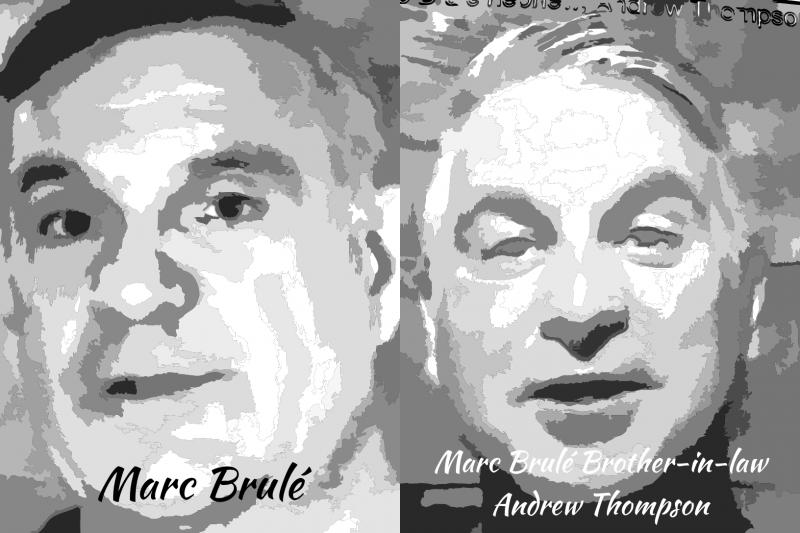
The evidence in this case will show a fourteen-year pattern – 1995 to 2009 – of manipulation, false accusation, nepotism, public undermining, and the deliberate destruction of a man's ministry and reputation by the very leaders who praised him to his face.
This case is about what happens when the church protects its politics instead of its people.
I want to be precise here, because integrity demands it: the early years at Wellspring were not without value.
I arrived in 1995 with five years of sobriety behind me, living on a disability pension as a result of PTSD from childhood abuse. I was not a whole man. I was a man in reconstruction – carefully, one day at a time. Wellspring, in those first years, offered something real. People like Paul Lacroix welcomed me with genuine warmth. There was community here. There was purpose. I contributed what I had – musically, organizationally, relationally – and it mattered.
I document this not to soften what follows, but to sharpen it. What was destroyed at Wellspring was not nothing. It was something I had built carefully, with real people, over real time. The betrayal that came later did not land in a vacuum. It landed in the middle of something I had invested my recovery in.
That is what makes it worth prosecuting.
I was invited to help launch an outreach program called The Party – a community event designed to bring people in from outside the church. I took the work seriously. I secured sponsors: Tim Hortons, Pizza Hut, and Zeller's. The first event succeeded.
At the next planning meeting, Andrew Thompson appeared for the first time. He had no prior involvement – no planning, no groundwork, no investment of time or relationship. He walked in, assessed what had been built without him, and immediately moved to assert control.
He berated Paul Lacroix and me for our choice of sponsors. His specific objection: Pizza Hut. He argued instead for Volcano's Pizza.
This was not about pizza. Anyone in that room with clear eyes could see what it was about. Andrew Thompson had arrived late to something that was already working, and he needed to put his mark on it. The specific target of the objection was irrelevant. The point was dominance – the establishment of a hierarchy in which his preferences superseded the work of the people who had actually done the work.
This is a recognizable pattern in organizational psychology: the late-arriving authority figure who reasserts control not by contributing but by criticizing. In a corporation, it is a management failure. In a church, it is dressed in the language of vision and anointing. The mechanism is identical.
Andrew Thompson would not have held a pastoral position at Wellspring without the nepotism that placed him there. That is not a character judgment. It is an observable fact about how his tenure began and how it operated throughout.
Paul Lacroix eventually left Wellspring under accusations of being "offended" – the evangelical catch-all used to dismiss anyone whose departure might otherwise require an honest accounting. The jury should note that Scripture is explicit on the subject of causing a brother to stumble. Andrew Thompson's hostility contributed directly to driving a good man out of ministry. No accountability was ever sought or offered.
The microphone incident removed all ambiguity about what kind of leader Andrew Thompson was.
I was leading worship – mid-song, mid-service, with the congregation engaged. Andrew Thompson walked onto the platform, took the microphone from the stand, and proceeded to issue new instructions to the band in front of everyone present.
His justification: God had told him to intervene.
Let the jury consider the theology embedded in that claim. The God who spoke the universe into existence, who parted seas and raised the dead, was apparently unable to communicate a course correction to the worship leader – the person with the microphone, standing at the front of the room. He could only reach Andrew Thompson, standing at the back. And the correction was so urgent it could not wait until after the service.
This was not a move of the Spirit. It was spiritual theater – the weaponization of divine authority to accomplish a very human goal: the public humiliation and subordination of someone who was leading effectively without needing Andrew Thompson's direction.
The congregation watched. Leadership watched. No one intervened.
The jury should understand the environment in which these events occurred, because context matters.
Over the years at Wellspring, I witnessed a consistent pattern of erratic behaviour excused as supernatural manifestation. Members of the congregation ran through the sanctuary making train sounds. People fell to the floor during prayer – not as an expression of reverence, but as a performance of being "slain in the Spirit." One woman split her head open. These events were not questioned. They were celebrated.
I raise this not to mock sincere faith. Genuine religious experience is real and varied. I raise it because the same leadership that tolerated – and encouraged – these spectacles as evidence of God's presence was simultaneously removing people from ministry on the basis of unverified accusations and whisper campaigns.
The standard of evidence was inverted: the more theatrical the behaviour, the more it was accepted without question. The more faithful the service, the more vulnerable it was to political attack.
That inversion is not incidental. It is structural. It is what happens when emotional performance becomes the currency of spiritual credibility, because emotional performance cannot be fact-checked.
In 2007, I was removed from worship leadership at Wellspring. The accusation that justified the removal: that I had said to Pastor Marc's teenage daughter Amy, in front of others: "I'm not here to serve you. You're here to serve me."
I did not say this. It did not happen.
What I am describing is not a misunderstanding or a difference in recollection. I was denied any opportunity to confront my accuser. I was denied any process by which I could present my account. Amy, when asked directly to clarify, walked away. No investigation was conducted. No witnesses were interviewed. No standard of evidence was applied.
Leadership acted on the accusation immediately and completely. I was removed.
The jury should recognize the mechanism here, because it appears throughout history in institutions that prioritize self-protection over justice: the accusation of a person connected to leadership is treated as sufficient proof of guilt. The accused is not informed of the charge before action is taken. The process of confrontation and reconciliation that Scripture explicitly commands – Matthew 18:15 to 17 – is bypassed entirely. The outcome that protects the institution is chosen before the facts are established.
In a court of law, this is called a denial of due process. In a church, it is called pastoral discretion.
They are not the same thing. And one of them destroys people.
For two years after my removal, I held on to the possibility that truth would eventually surface. Then came the annual meeting.
Christine Journeay – a member of the congregation with enough clarity to ask the question others avoided – stood up and asked leadership why worship leaders kept disappearing from Wellspring.
Pastor Marc Brulé's response, delivered from the front of the room to the assembled congregation, was this: no worship leader had been removed. They had simply been reassigned.
I had been removed. I was not reassigned. That statement was false, and Marc Brulé knew it was false when he made it.
This is the moment that ended any remaining possibility of reconciliation – not because I demanded perfection from leadership, but because a direct lie, told publicly, to protect an institution from accountability, is not a pastoral failure. It is a moral one. There is no version of Christian ethics – no denomination, no theological tradition – that accommodates lying to a congregation about what was done to one of its members.
That lie is in the record. It belongs in this trial.
Even after leaving Wellspring, I attempted reconciliation. I extended genuine olive branches – inviting Andrew Thompson to share a stage, opening doors for him in ministry contexts, treating him as someone worth restoring a relationship with.
He accepted publicly. He praised me publicly. He called me, in front of others, a man of integrity.
Behind closed doors, he and Marc Brulé were making calls to other pastors – including leadership at Christ Community Church, where I later served as worship director – raising unspecified concerns about my character. These conversations were conducted without my knowledge and without any basis in documented fact. Their effect was to follow me out of Wellspring and into the next chapter of my ministry, closing doors I had not yet opened.
The jury should understand what this represents. This was not two leaders processing a difficult situation. This was a coordinated effort to ensure that a man they had already wronged could not rebuild what they had taken from him.
Praise in public. Sabotage in private. That is not a pastoral relationship. That is a campaign.
"These were internal church disputes. Leadership made difficult judgment calls in good faith."
Good faith requires process. There was no process – no confrontation of the accused before action was taken, no investigation, no opportunity to respond. Good faith also does not involve lying to a congregation about what occurred. The absence of process and the presence of a documented lie remove the defence of good faith from consideration.
"Andrew Thompson genuinely believed he was following God's leading."
Sincerity is not a defence against harm. A leader who genuinely believes his instincts are divine revelation and therefore bypasses accountability, evidence, and due process is more dangerous than one who knows he is acting badly – because he cannot be corrected. The fruit of Andrew Thompson's leadership – good people driven out, false accusations acted upon, reputations followed and damaged – is the standard Scripture itself applies.
"Don was a difficult personality in a volunteer ministry context. These conflicts happen."
They do. And when they happen, Scripture provides a clear process: go to your brother alone, then with witnesses, then before the church. That process was not followed at any stage. What happened instead was removal without confrontation, lies without correction, and sabotage without accountability. The conflict is not what is on trial here. The response to the conflict is.
Members of the jury, I came to Wellspring Community Church five years sober, rebuilding a life that had been dismantled by violence and abuse before I was old enough to understand what was being done to me. I brought what I had – my music, my time, my recovery, my trust.
What I received in return was a false accusation acted upon without process, a lie told from the front of a room to protect the people who had wronged me, and a coordinated effort to follow me into my next chapter and close the doors before I arrived.
Marc Brulé and Andrew Thompson did not do to me what Father Camille Léger did. But they did something the church does with far more frequency and far less accountability: they used the language of God to do the work of ego, and they used the structure of the church to make sure no one could stop them.
The Bible they preached from says this, in Proverbs 19:5:
"A false witness will not go unpunished, and whoever pours out lies will not go free."
That standard applies regardless of the title on the office door.
Pastor Andrew Thompson: Guilty of public undermining of a fellow minister, orchestration of a false accusation, nepotistic abuse of pastoral authority, and deliberate sabotage of a man's ministry across multiple church contexts.
Pastor Marc Brulé: Guilty of acting on an unverified accusation without due process, lying to a congregation about the removal of a worship leader, and failing at every point to apply the scriptural standard of reconciliation he preached.
Wellspring Community Church: Guilty of providing the institutional cover within which these behaviours operated without consequence – and of failing the people it was built to serve.
The most dangerous leader in any institution is not the one who does obvious evil. It is the one who does quiet harm in the name of obvious good – who can always produce a scripture, a justification, a spiritual-sounding reason why what they did was necessary.
Wellspring Community Church had two of them. And the congregation called it leadership.
This court calls it what it is.